What happens in Marvel Rivals when a loss ends the video?
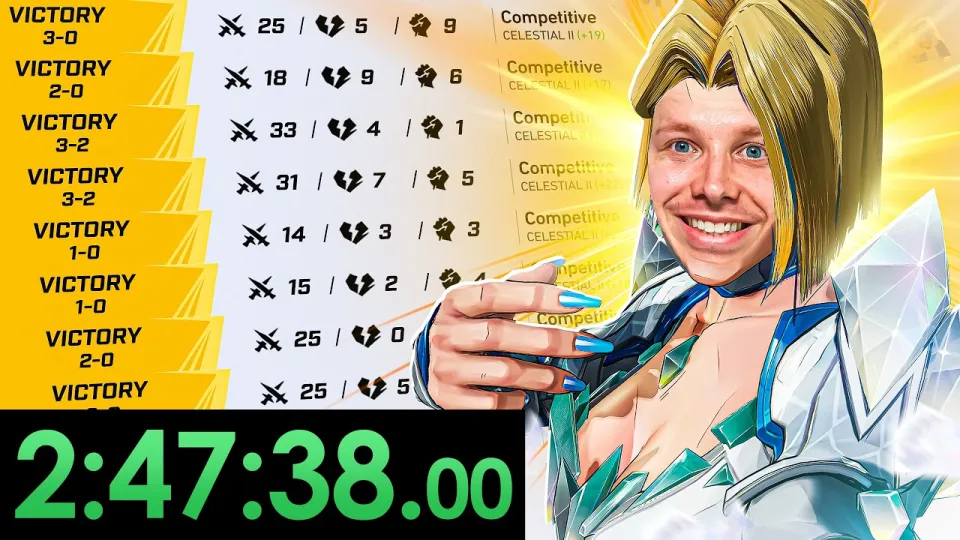
Video: IF I LOSE, THE VIDEO ENDS... (Marvel Rivals)
Want articles like this for your own video to promote it on YouTube and Google? Order them through the Telegram bot @sat_sit_bot. The bot writes and publishes the articles itself (with your YouTube video embedded) on popular topical websites (no ads). Your first 50 articles are free.
· based on the channel Jay3
Marvel Rivals becomes a sudden-death run in Jay3's video: the rule is simple, if he loses a match the video ends, so every game carries the weight of a final. That format turns an ordinary hero shooter session into a streak challenge where one bad team fight, one thrower or one greedy dive can cut the footage short. Jay3, a longtime Grandmaster Overwatch player, streams the whole thing live on his Twitch channel, where viewers can watch the run unfold in real time.
How the lose-and-the-video-ends format works in Marvel Rivals
The rule is a streak challenge: each match is played as if it were the last, because a single defeat stops the recording. Marvel Rivals is a 6v6 hero shooter built around team composition, role balance and objective control, which means the format punishes exactly the habits that normally go unpunished in casual play. Players who treat one round as a warm-up, who experiment with a hero they never play, or who let a teammate tilt the lobby usually get away with it; under this rule, they do not.
A few things make the format genuinely tense:
- No throwaway games. Every queue is a must-win, so hero picks get more conservative and comfort picks matter more.
- Momentum is everything. Winning streaks build confidence, but one loss resets the entire recording.
- Team quality is out of your hands. Random teammates, off-role players and griefers are the biggest threat to the run, not the enemy team.
- Pressure changes decisions. Players chase kills they would normally skip, and that is exactly how streaks end.
The result is a video that reads less like a highlight reel and more like a survival run, where the interesting parts are the near-misses, the desperate swaps and the moments where a teammate's decision nearly ends everything.
Marvel Rivals basics that decide a no-loss run
Marvel Rivals rewards coordination over individual heroics, so a streak run lives or dies on fundamentals. The game pits two teams of six against each other with heroes split into Vanguard, Duelist and Strategist roles, and a team that skips a role usually loses the objective fight before skill even matters. Vanguards absorb pressure and create space, Duelists convert that space into picks, and Strategists keep the whole structure alive; a lobby with four Duelists and one Strategist is a recipe for a short video.
Objective play matters as much as eliminations. Payload and domination-style modes reward teams that hold angles and regroup instead of trickling in one at a time, and the team that wins the first clean fight usually controls the pace of the match. Ultimate economy is the other lever: stacking ultimates instead of firing them one by one is the difference between a wiped team and a wasted minute. For a player coming from Overwatch, the transferable skills are positioning, cooldown tracking and target priority; the new part is learning which Marvel heroes fill which role and how their team-up abilities change a fight.
Why Overwatch habits carry over so directly
Jay3's background is Overwatch at Grandmaster level, and that pedigree shows in how he approaches Marvel Rivals. Both games are built on the same skeleton: six-player teams, role-based compositions, ultimate abilities on timers, and maps that funnel fights into chokepoints. A player who has spent years tracking enemy cooldowns and reading when a fight is lost will recognize the same signals in Rivals, just with different hero names and animations.
The differences are where the streak gets interesting. Marvel Rivals leans harder into mobility and verticality, with heroes that fly, swing and dive from unusual angles, and its team-up system rewards specific hero pairings with bonus abilities. A Grandmaster-level Overwatch player can out-position most lobbies, but a Spider-Man or an Iron Man diving from above can punish the same predictable angles that worked in a different game. That gap between old instincts and new heroes is the real content of the run.
Typical viewer questions about Marvel Rivals matches
The most common doubts around this kind of video are about teammates, not the format itself. Viewers regularly describe ranked runs ruined by players who pick a hero they cannot play, refuse to swap, or deliberately sabotage the match, and the frustration is real: a single griefer can decide a game that five other people are trying to win. The practical answer is to queue with at least one reliable partner, lock a role you can carry from, and treat every match as a chance to practice regrouping rather than a referendum on your rank.
Another recurring theme is the Spider-Man problem: a dive hero who commits entirely to one target, usually the support, and ignores the objective. It is annoying to play against, but it is also exploitable, because a Spider-Man who tunnels one player is not applying pressure anywhere else. Staying grouped, saving a crowd-control cooldown for the dive and punishing the escape route turns that aggression into a numbers advantage.
Placement matches come up often too. New and returning players report wildly uneven lobbies during placements, with teammates who seem to be learning the game at the same time as the enemy team is not. That is normal for a young competitive ladder: matchmaking tightens as more players settle into their ranks, and the fastest way through the noise is to play a small hero pool well instead of flexing across ten characters.
Where to follow Jay3 and the rest of his content
Jay3 publishes across several channels, and each one serves a different purpose. The main YouTube channel carries edited videos like this Marvel Rivals streak run, the gameplay channel hosts longer unedited sessions, and the VODs channel archives full streams for anyone who wants the complete context behind a clip. Social accounts cover shorter clips, schedule updates and community announcements.
- Twitch, live streams: https://twitch.tv/jay3
- Twitter, updates and clips: https://twitter.com/jay3ow
- TikTok, short-form highlights: https://tiktok.com/@jay3twitch
- Instagram, behind-the-scenes posts: https://instagram.com/jay3twitch
- Discord, community and matchmaking: https://discord.gg/jay3
The bottom line on this Marvel Rivals challenge
The lose-and-the-video-ends rule works because it converts a normal hero-shooter session into a test of discipline. Marvel Rivals already demands role balance, ultimate coordination and objective control, and the format removes the safety net that lets players ignore those basics. Jay3's Overwatch background gives him the positioning and cooldown awareness to survive longer than most, but the run still hinges on teammates, hero picks and one bad fight. For viewers, the appeal is watching a Grandmaster-level player navigate a game where the lobby, not the opponent, is the real boss. Follow the live version of these runs on Jay3's Twitch stream, where the next streak starts from zero.
Key takeaways
- Jay3's Marvel Rivals video uses a single rule: if he loses a match, the video stops right there.
- The format turns every ranked or quick match into a sudden-death run with no room for a throwaway game.
- Jay3 built his audience as a Grandmaster Overwatch player, so hero-shooter fundamentals carry directly into Marvel Rivals.
- Viewer discussion around the video centers on throwers, team composition and Spider-Man players who tunnel one target.
- Jay3 streams live on Twitch and posts clips across several YouTube channels, including a dedicated gameplay channel.
Source: IF I LOSE, THE VIDEO ENDS... (Marvel Rivals) · Markdown version
Questions & answers
What is the rule in Jay3's Marvel Rivals video?
The video is a streak challenge: if Jay3 loses a single match, the video ends immediately. That means every game is played as a must-win, with no throwaway rounds or experimental picks. The tension comes from the fact that random teammates can end the run faster than the enemy team can.
Why do Marvel Rivals matches feel so dependent on teammates?
Marvel Rivals is a 6v6 hero shooter where Vanguard, Duelist and Strategist roles have to work together to hold objectives. A team that skips a role, refuses to swap or trickles into fights loses regardless of individual skill. One player who deliberately throws or picks a hero they cannot play can decide the match for five other people.
How does a Spider-Man player who tunnels one target get punished?
A dive hero who commits entirely to one target stops applying pressure anywhere else on the map. Staying grouped, saving a crowd-control cooldown for the dive and cutting off the escape route turns that aggression into a numbers advantage. The counter is patience rather than a duel.
Do Overwatch skills transfer to Marvel Rivals?
Yes, the fundamentals transfer almost directly: six-player teams, role-based compositions, ultimate economy, cooldown tracking and map chokepoints all work the same way. The adjustment is learning which Marvel heroes fill which role and how team-up abilities change a fight. A high-level Overwatch player starts with a real advantage in positioning.